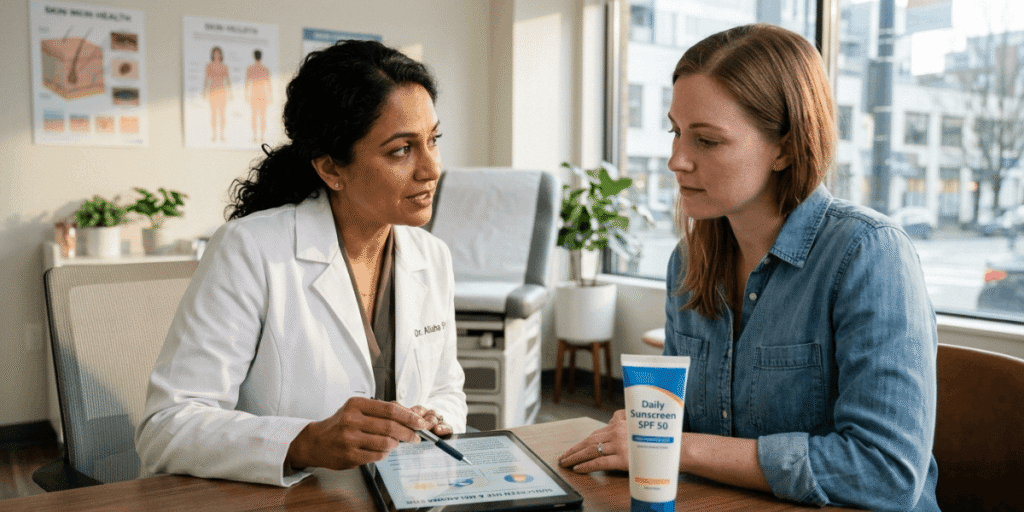
Sunscreen has a reputation problem. Some people treat it as a beach accessory, others as an optional extra, and a few skip it completely because they tan easily. Dermatologists hear these excuses every week, and they also hear the regret that follows a late diagnosis. Melanoma may not cause noticeable symptoms early, so prevention should start long before any warning sign appears.
The encouraging part is that the habits are simple, cheap, and easy to keep. Once the science behind SPF really works for melanoma prevention, daily protection becomes a straightforward habit. Let’s sort fact from myth together so that you can protect your skin with lasting confidence and fewer worries.
What Melanoma Is and Why Prevention Matters
When the skin’s pigment-producing cells, known as melanocytes, become cancerous, they can develop into melanoma, a type of skin cancer. It can appear as a new dark spot or as a change in an existing mole. Ultraviolet light from the sun is a major cause. Melanoma is less common than other skin cancers, yet it is far more dangerous.
Melanoma is serious, with nearly 20 Americans dying from it every single day. Because UV exposure is an important preventable risk factor, consistent sun protection matters. Sunscreen can help reduce skin cancer risk, but it cannot block all UV radiation, so combine it with shade and protective clothing for more complete protection.
How Much Sunscreen Do Dermatologists Recommend?
The right amount, timing, and label all count.
Start With SPF 30 or Higher
Dermatologists recommend SPF 30 or higher for broad sun protection. When applied properly, SPF 30 filters out roughly 97% of UVB rays. Higher SPFs provide slightly more UVB protection, but applying enough sunscreen remains essential for achieving the protection listed on the label.
Use Enough to Fill a Shot Glass
For most adults, about one ounce of sunscreen, or approximately a shot-glass amount, is needed to cover exposed areas of skin. However, many people apply only 20–50% of the amount needed to achieve the SPF listed on the label. Measure it once so you know what enough looks like.
Apply Early and Reapply on Schedule
Put sunscreen on about 15 minutes before going outside so it can settle on the skin. Reapply every two hours outdoors, and right after swimming or sweating. A phone reminder helps keep reapplication on schedule.
Pick Broad-Spectrum, Water-Resistant Formulas
Broad-spectrum labels mean the product covers both UVA and UVB rays. Water resistance helps maintain protection during swimming or workouts, but you still need to reapply sunscreen regularly. Chemical, mineral, and hybrid sunscreens all work when they meet these label standards.
Sunscreen Myths a Dermatologist Wants You to Drop
A few common beliefs leave people less protected than they think.
| Myth | Fact |
| Darker skin never needs sunscreen. | Anyone can get melanoma, so every skin tone needs daily protection. |
| Cloudy days are safe. | UV rays pass through clouds, so apply sunscreen every morning. |
| A high SPF lasts all day. | Every SPF wears off at the same rate, so reapply every two hours outdoors. |
| A base tan protects your skin. | A tan signals UV damage and does not reliably protect against skin cancer. |
| Sunscreen is only for beach days. | Routine UV exposure can damage skin, so use sunscreen during ordinary outdoor activities too. |
| Water-resistant means waterproof. | No sunscreen is waterproof, so reapply after swimming, sweating, or toweling off. |
Cloudy skies do not cancel your need for a skin check. Coastal Dermatology & Plastic Surgery offers expert dermatology in Orange Coast to patients seeking personalized skin care. Reach out today to get the expert skin care your skin deserves.
Daily Sunscreen Habits a Dermatologist Recommends
Small, steady routines protect your skin far better than occasional effort.
- Apply sunscreen every morning right after brushing teeth, so the habit becomes automatic and no day gets skipped.
- Cover the face, ears, neck, and backs of the hands, since these areas face the sun every single day.
- Keep a small bottle in a bag or car so reapplying every two hours outdoors stays quick and simple.
- Wear a wide-brimmed hat and UV-blocking sunglasses on bright days, as shade and clothing add protection that sunscreen alone cannot provide.
- Proven habits protect skin far better than popular myths suggest.
- Regularly look for new or changing moles, and schedule a skin examination when anything unusual appears.
Frequently Asked Questions About Sunscreen and Melanoma
Does sunscreen prevent melanoma completely?
No. It can help reduce skin cancer risk, though shade and clothing provide additional protection. Using all three together offers the most complete protection.
How much sunscreen do dermatologists recommend for the whole body?
About one ounce for most adults, applied to all skin not covered by clothing.
Do I need sunscreen on cloudy days?
Yes. UV rays pass through clouds, so apply it every morning.
How should I reapply during the day?
Reapply every two hours outdoors and after swimming or sweating. These daily sunscreen habits help maintain steady protection.
When should I see a dermatologist?
See one when a mole changes size, shape, or color, or when a spot itches or bleeds.
Conclusion
Sunscreen cannot eliminate melanoma risk, but research suggests regular use may reduce it. SPF for melanoma prevention works best when you pick a broad-spectrum SPF 30 or higher, apply about one ounce, and reapply every two hours. Add shade, clothing, and regular skin checks, and you give your skin its best chance.
Coastal Dermatology & Plastic Surgery supports every aspect of patient care. Patients considering breast augmentation in Huntington Beach, CA can count on clear information and compassionate support at every step. Connect with our team today.